Cuban cigars have long been counterfeited. Habanos S.A. therefore gives every box several features that can be checked. This article explains what the guarantee seal, the stamps on the bottom of the box, the box code and the band indicate, and where a code can be verified.
Why are there counterfeit Habanos?
Counterfeits exist because demand for well-known Cuban brands is high and production is limited. Particularly sought-after lines and limited editions are a target.
Cigar Aficionado, for example, has reported on counterfeit Cohiba Behike. Typical signs of counterfeits are unusually low prices, offers on the street or from supposed contacts in a factory, and labels supplied loose rather than affixed to the box. According to Cigar Aficionado, boxes with glass or transparent lids do not come from Habanos S.A.
What is the guarantee seal?
The Cuban government's guarantee seal is a paper seal stuck across the edge of the box. It confirms Cuban origin and today features a hologram and an individual barcode.
History of the seal
- 1889: first introduced by royal decree of the King of Spain.
- 1912: the independent Cuban government approves by law a new design similar to today's.
- 1931: slight revision.
- 1999: major change, with a red serial number and an emblem visible only under UV light.
- 2009: introduction of the hologram and an individual barcode, which tracks every box from production to the exclusive distributor.
Security features
The current seal has a hologram on the right and, on the left next to the coat of arms, a barcode that individualises each package. According to Habanos S.A., it destroys itself if someone attempts to peel it off, is protected against scanning and photocopying, shows two-colour text with a three-dimensional effect in the hologram and contains a microdot visible only with a laser scanner. It is applied to the upper left side of the box and folded over the front.
What does the Habanos seal mean?
The Habanos seal identifies the protected designation of origin. According to Habanos S.A., all boxes have carried it since 1994. It is distinct from the guarantee seal and is usually located at the top right of the box.
What is on the bottom of the box?
The bottom of the box bears branded markings on origin, manufacturer and method of production, as well as two ink stamps. Together they show how, where and when the cigars were packed.
- Hecho en Cuba: since 1960, this inscription has been branded into the bottom of every Habano box.
- Habanos s.a.: branded since 1994; from 1985 to 1994 it read “Cubatabaco”.
- Totalmente a mano: since 1989, boxes of classic long-filler (tripa larga) Habanos have carried this inscription, meaning “totally by hand”.
- TC: since 2002, boxes with short filler (tripa corta) have also carried the TC ink stamp.
How do you read the box code?
The box code consists of two ink stamps: a factory code and the packing date. According to Habanos S.A., this system has been in place since 2000.
Factory code
The factory code is an abbreviation, usually of two to four capital letters, that tells the industry in which factory the cigars were made. Habanos S.A. describes it as a secret code. The abbreviations are changed periodically, partly so that buyers do not seek out individual factories.
Date code
Since 2000, the date has consisted of a three-letter Spanish month abbreviation and a two-digit year, for example AGO 19 for August 2019. The months are ENE, FEB, MAR, ABR, MAY, JUN, JUL, AGO, SEP, OCT, NOV and DIC.
Before 2000, month and year were encoded with four letters. The basis was the code word NIVELACUSO, whose ten letters stand for the digits 1 to 0. “OCSC” therefore meant 0797, i.e. July 1997.
This code word gives the following mapping:
| Letter | N | I | V | E | L | A | C | U | S | O |
|---|---|---|---|---|---|---|---|---|---|---|
| Digit | 1 | 2 | 3 | 4 | 5 | 6 | 7 | 8 | 9 | 0 |
The first two letters stand for the month, the last two for the year. A present-day stamp such as “ENE 24”, by contrast, can be read directly and stands for January 2024.
The date code indicates the packing date, not the year of the tobacco harvest. For aged special editions such as Reserva or Gran Reserva, the harvest year is stated separately as “Cosecha”.
What should you look for on the band?
The band is a supplementary feature, but not a conclusive one. According to Cigar Aficionado, counterfeits often stand out through missing embossing, differing colours and imprecise details.
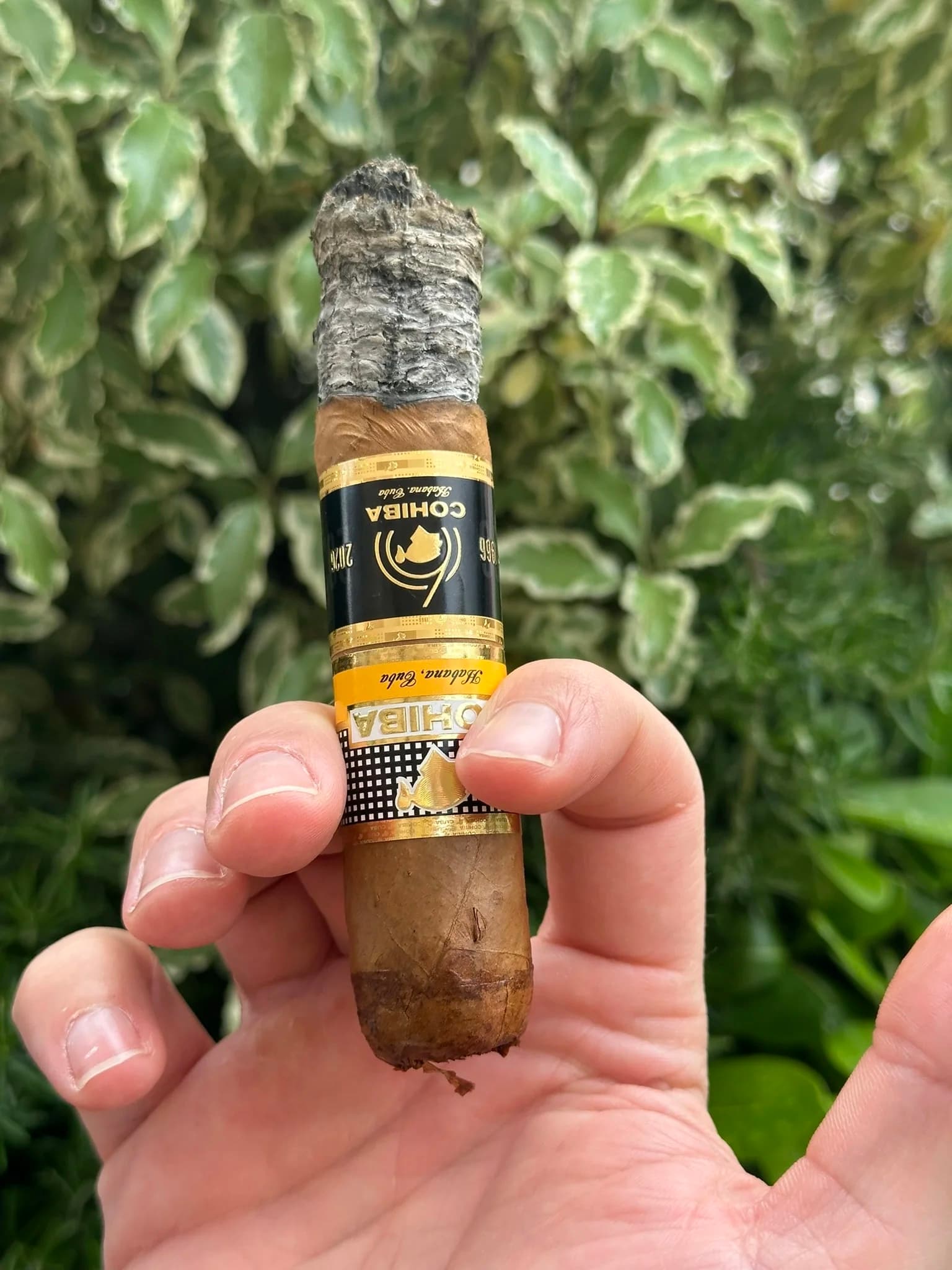
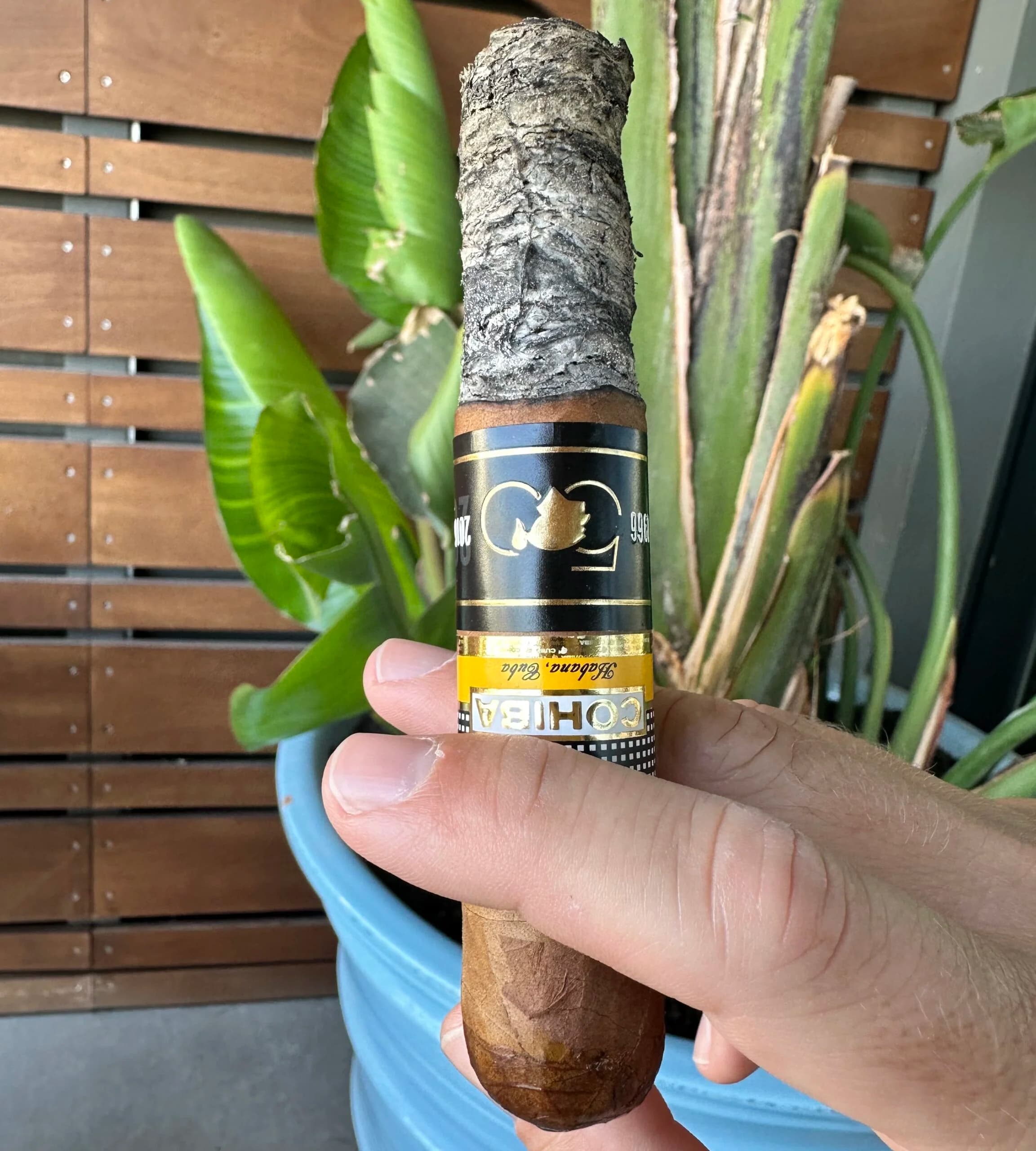
Comparing with verified images of the brand in question, such as Montecristo or Partagás, can reveal differences in lettering, embossing and shade. Note that Habanos S.A. has changed the design of its bands over the years; a different band is therefore not in itself proof of a counterfeit. Special editions often carry a second band, for example the black and gold band of the Edición Limitada.
Where can authenticity be checked?
Habanos S.A. provides an online check on habanos.com. There, the code of the guarantee seal can be entered and compared against the database.
The check relates to the box and its seal. The interplay of all features is the most telling: an intact, firmly stuck guarantee seal with a valid code, the Habanos seal, the branded markings and stamps on the bottom, and consistent bands. If one of these elements is missing or they appear contradictory, that is a reason for closer examination.